

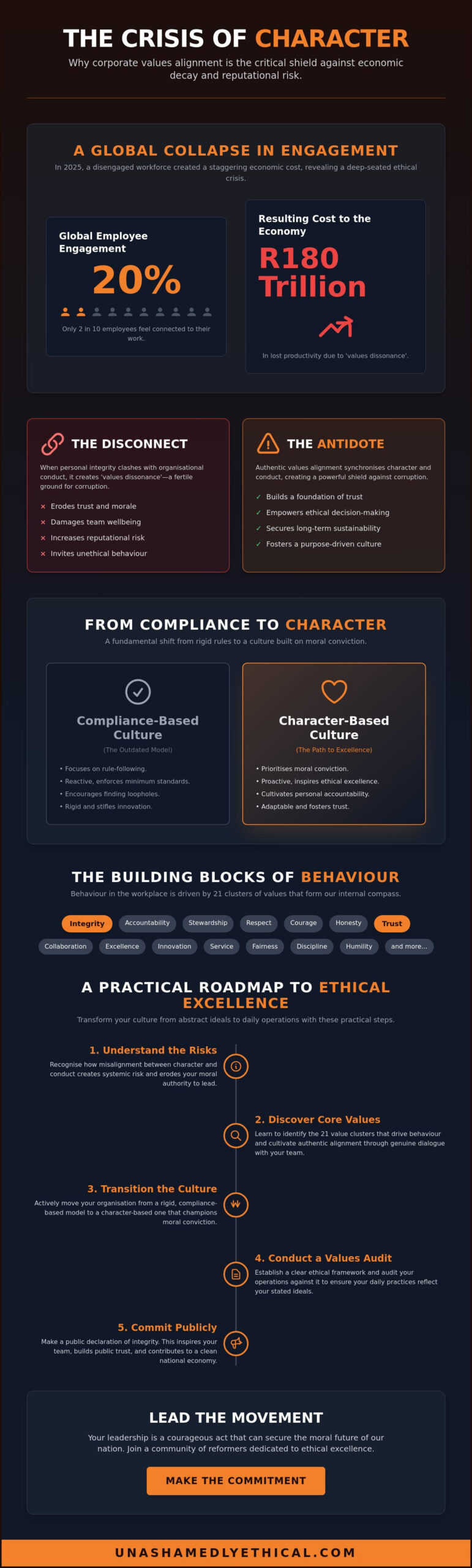
Global employee engagement plummeted to just 20% in 2025, costing the world economy a staggering R180 trillion in lost productivity. This isn’t just a failure of management; it’s a profound crisis of character that threatens the very fabric of South Africa’s economic future. When your team feels a disconnect between their personal integrity and the organisational conduct they witness, you don’t just lose talent; you lose the moral authority to lead. True corporate values alignment is no longer a luxury for the human resources department. It’s a courageous act of leadership that secures the moral future of our nation.
You likely feel the weight of this responsibility as you watch systemic corruption erode trust across our industries. We agree that building a clean national economy starts within the walls of your own boardroom. This article provides a definitive roadmap to bridge the gap between abstract ideals and daily operations to transform your culture into a catalyst for change. We’ll explore how to foster radical accountability, restore trust amongst your individual contributors, and move from mere compliance to active ethical excellence in 2026.
Key Takeaways
- Understand why synchronising individual character with organisational conduct is your strongest shield against systemic corruption and reputational risk.
- Discover the 21 clusters of values that drive workplace behaviour and learn how to achieve authentic corporate values alignment across every tier of your firm.
- Transition from a rigid, compliance-based culture to a character-based model that prioritises moral conviction over mere rule-following.
- Identify the practical steps to conduct a values audit and establish an ethical framework that meets South African standards like PRECCA.
- Learn how a public declaration of integrity through the Unashamedly Ethical Commitment can inspire your team and contribute to a clean national economy.
Understanding Corporate Values Alignment as a Moral Mandate
Corporate values alignment is the sacred synchronisation of individual character with the collective conduct of an organisation. It represents a bold commitment to ensuring that every heartbeat within a company resonates with the same moral frequency. In 2026, we’ve moved past the era where ethics were merely a footnote in an annual report. Today, alignment serves as the primary bastion against the corrosive forces of systemic corruption and unethical behaviour that have too often hindered our national progress. It’s the difference between a company that merely survives and one that thrives as a beacon of hope for all South Africans.
The Shift from Profit-Centred to Purpose-Centred
Modern stakeholders across the globe now demand more than just robust financial returns. They expect businesses to act as virtuous citizens within a larger ecosystem of mutual benefit. This evolution requires a clear distinction between the “Why” and the “How” of your corporate existence. Purpose defines our destination, whilst values dictate the conduct of our journey. When your purpose is rooted in societal improvement, your profit becomes a dignified byproduct of your integrity. It’s about moving from a model of extraction to one of contribution where every transaction strengthens the social fabric, a goal shared by organisations like Incorporated Earth that focus on improving health and quality of life.
Why Alignment is the Antidote to Unethical Conduct
A profound misalignment between personal beliefs and corporate actions creates the fertile ground where bribery, nepotism, and greed take root. When corporate values alignment is authentic and deeply embedded, it provides every team member with the moral strength to resist compromise. It empowers even the most junior employee to say “no” to an unethical request because they understand that their character is the organisation’s greatest asset. This “Clean Living” philosophy ensures that our professional spaces remain sanctuaries of accountability and trust, shielding the brand from the high cost of reputational risk.
The leader’s role has transformed into that of a principled guide who actively cultivates a healthy Organizational culture. You aren’t simply managing a workforce to hit targets; you’re nurturing a community of reformers who are dedicated to excellence. By integrating moral values into every operational sequence, you transform your business into a powerful catalyst for national renewal. This mandate requires a steadfastness of spirit that inspires others to belong to something greater than themselves. It is a call to lead with courage, ensuring that your company’s conduct always reflects the highest standards of ethical excellence.
The Interplay Between Personal Integrity and Organisational Ethics
Individual character forms the essential building blocks of any virtuous organisation. We don’t build culture with policies; we build it with people. When we speak of corporate values alignment, we’re describing the living, breathing synchronisation of human hearts. There’s a profound synergy between personal and organizational values that dictates how a business responds to crisis. We identify 21 specific clusters of values that typically drive behaviour in the workplace. These clusters, including integrity, accountability, and stewardship, act as the internal compass for every decision made from the shop floor to the boardroom. When these clusters clash with corporate mandates, the result is ‘values dissonance’. This psychological friction doesn’t just lower productivity; it erodes the mental wellbeing of your team. They feel divided against themselves, forced to choose between their livelihood and their conscience. Transformational leadership serves as the vital bridge, turning this potential conflict into a unified mission that honours both the individual and the collective.
Identifying Individual Values amongst the Workforce
Leaders must become experts at uncovering the core motivators of their teams. This requires a level of vulnerability and honesty that many traditional managers find uncomfortable. To help your management team navigate these psychological barriers, you can check out Feed Your Brain for neuroscience-based coaching designed to help leaders and teams overcome resistance to change. You can’t demand alignment; you must cultivate it through genuine dialogue and active listening. Our TRIBE Youth Development Program principles are particularly effective here. They provide a framework for mentoring young professionals, ensuring that the next generation of South African leaders enters the workforce with their integrity intact. It’s about helping them find their ‘why’ within the context of your organisation’s ‘how’. When a young professional sees their work as an extension of their personal mission, their commitment becomes unshakable. This mentorship creates a sense of belonging that transcends a mere contract, fostering a culture of mutual respect and shared purpose.
Bridging the Gap: When Personal Beliefs Meet Corporate Behaviour
Conflicts between personal ethics and business goals are inevitable in a complex market. You need a robust framework to resolve these tensions before they lead to disengagement or, worse, ethical failure. In South Africa, the Social and Ethics Committee plays a pivotal role in facilitating this dialogue. They aren’t just a regulatory requirement; they’re the guardians of the company’s soul. They ensure that the organisation’s conduct remains beyond reproach even when the path forward is unclear. Alignment is a continuous process of calibration, not a one-time event. It requires constant attention, regular reflection, and a willingness to course-correct when the pressure to compromise arises. If you’re ready to lead this change, you might consider how to Sign the Unashamedly Ethical Commitment to anchor your team in a shared pursuit of excellence. This public declaration serves as a powerful reminder that your organisation stands for something greater than profit alone.
Beyond Compliance: Why Character-Based Alignment Outperforms Regulation
Compliance is often viewed as a restrictive ceiling, but in a truly virtuous organisation, it’s merely the floor. A compliance-based culture relies on external rules and the threat of punishment to dictate behaviour. This approach is inherently reactive; it waits for a boundary to be crossed before intervening. In contrast, a character-based culture is driven by internalised values that guide decisions even when no one is watching. True corporate values alignment ensures that every individual is anchored by a personal commitment to do what is right. This isn’t just a philosophical preference. It’s a strategic necessity in a landscape where the cost of regulatory failure can reach millions of Rands in fines and irreparable reputational damage.
For those in the franchise sector, this strategic necessity extends to protecting the brand’s reputation across all outlets; Imagine Franchise provides the strategic consulting and executive coaching required to maintain operational excellence and growth.
South Africa’s King IV Report recognises this reality by positioning ethical leadership as a core governance requirement. It’s no longer enough to tick boxes on a spreadsheet. Boards are now legally and morally expected to demonstrate how they’ve cultivated an ethical culture. The ethical implications of organizational culture dictate that when character is aligned, the need for heavy-handed monitoring diminishes. People don’t need a rulebook for every scenario when they possess a shared moral compass. This internal alignment creates a resilient organisation that can withstand the pressures of corruption and greed.
The Limitations of Check-Box Ethics
Rules alone can’t prevent corruption if the underlying character is flawed. A “check-box” approach often encourages people to find loopholes, adhering to the letter of the law whilst violating its spirit. We’ve seen this in numerous corporate scandals where policies were technically followed, but the outcomes were morally bankrupt. Moving beyond policy documents requires “Ethics in Action.” This is where our Ethics in Action Business Consultancy helps firms breathe life into their stated values. We move from static documents to living conduct, ensuring that integrity isn’t just a word on a wall, but a daily practice that defines every interaction.
Building a Culture of Accountability
Accountability shouldn’t be a punitive tool used to strike fear into the hearts of employees. Instead, it’s a supportive mechanism for growth and mutual excellence. When corporate values alignment is achieved, it creates a self-policing environment amongst peers. Colleagues hold each other to a higher standard because they share a common purpose. This culture of integrity naturally protects whistleblowers, viewing their courage as an act of loyalty to the organisation’s soul rather than a betrayal. It fosters a space where honesty is celebrated and the “Clean Living” philosophy becomes the standard for everyone, from the CEO to the newest intern, often reinforced through experiential learning and facilitated team-building from TeamLabs.
Practical Strategies to Organise Values Alignment Across Your Organisation
Transforming a noble vision into a lived reality requires a deliberate, structured roadmap that leaves no room for ambiguity. It’s about moving from abstract concepts to concrete actions that resonate through every level of the firm. Authentic corporate values alignment is achieved when the principles displayed on your boardroom wall match the decisions made in your most high-pressure negotiations. This process isn’t a peripheral human resources project; it’s a fundamental restructuring of your corporate soul to ensure every operation serves the greater good of South Africa. When considering the structural side of these HR functions, exploring models like those provided by Easeworks can offer valuable insights into building a robust administrative foundation.
To begin this journey of reform, follow these five essential steps:
- Step 1: Conduct a Values Audit. Identify the chasm between your “lived” values and your “stated” values to understand your true cultural baseline.
- Step 2: Define a Clear Ethical Framework. Align your internal policies with national standards like the Prevention and Combating of Corrupt Activities Act (PRECCA) to ensure legal and moral fortitude.
- Step 3: Model Transformational Leadership. Utilise our Transformational Leadership on Demand service to equip your executives with the character needed to model desired behaviours.
- Step 4: Operationalise Values. Embed ethical criteria into your hiring processes and performance reviews so that character becomes a prerequisite for advancement.
- Step 5: Establish Accountability Measures. Implement transparent systems that consistently reward integrity and address misconduct without fear or favour.
Auditing Your Current Cultural Alignment
You cannot fix what you don’t measure. A comprehensive audit requires you to look honestly at the “values gaps” in your daily operations. Use anonymous employee feedback to uncover unethical pockets that might be hidden from senior management. It’s vital to differentiate between “aspirational” values, which are what you hope to be, and “actual” behaviours, which define who you are today. This honesty is the first step toward genuine growth. Recognising where you’ve fallen short allows you to build a more resilient, honest foundation for the future.
Integrating Ethics into Daily Decision-Making
Every major executive decision should pass a “Values-Test” before it’s finalised. Ask whether the choice honours your commitment to honesty, stewardship, and communal responsibility. Leadership character is most visible when navigating high-pressure business deals where the temptation to compromise is strongest. You must actively reward ethical excellence, ensuring that those who stand for what is right are celebrated as much as those who achieve financial success. This shift in recognition signals to the entire workforce that integrity is the non-negotiable currency of your organisation. If you’re ready to anchor your business in these principles, you can Sign the Unashamedly Ethical Commitment today and join a global movement of principled leaders.
Leading the Movement: How to Commit to Unashamedly Ethical Excellence
The time for passive observation has passed. As we look toward the horizon of 2026, the call for leaders who are willing to stand for specific, unshakeable ideals has never been louder. Committing to ethical excellence isn’t a solitary burden; it’s an invitation to join a collective of reformers dedicated to the systemic renewal of South Africa. By embracing corporate values alignment, you aren’t just improving your internal culture; you’re contributing to a ‘clean’ national economy that benefits every citizen. This movement begins with a decisive choice to align your professional conduct with your deepest moral convictions.
For businesses looking to ensure these character-driven rewards reflect in their customer retention and market growth, you can read more about integrating values into your customer experience strategy.
The Ethics in Action Framework
Navigating the complexities of modern industry requires a partner who understands the depth of your mission. Our Ethics in Action Business Consultancy provides the structured support needed to tailor an ethical roadmap for your specific sector. We help you move from abstract ideals to concrete operational reality, ensuring that your values are visible in every transaction. External accountability is a powerful tool for maintaining high moral standards; it provides the objective perspective necessary to guard against complacency. For those seeking continuous growth, our Transformational Leadership on Demand service offers ongoing development to keep your leadership team anchored in virtuous principles. This partnership ensures that your commitment to excellence remains steadfast even when market pressures mount.
Signing the Commitment: A Public Declaration of Integrity
There is immense power in a public pledge. Signing the Unashamedly Ethical Commitment is both a symbolic and practical act that signals your firm’s dedication to a higher standard. This declaration builds immediate trust with customers who are weary of corporate greed and with investors who seek long-term stability. Perhaps most importantly, it resonates with the youth of South Africa, who are looking for organisations that mirror their own aspirations for a just and honest society. By making your stance known, you foster a sense of belonging to a global movement that refuses to compromise on character. This is your opportunity to anchor your brand in a legacy of honour and accountability. We challenge you to take the final step in your journey of reform. Sign the Unashamedly Ethical Commitment and lead the change you wish to see in our nation.
Securing the Moral Future of South African Business
We’ve explored how syncing individual character with corporate conduct creates a formidable fortress against corruption. Moving beyond check-box compliance to a character-based model isn’t just a governance requirement; it’s a strategic shield for your reputation. True corporate values alignment ensures your team doesn’t just follow rules but lives out shared principles even when no one is watching. This transformation requires a deliberate roadmap, moving from a values audit to a culture of radical accountability that empowers every employee. For leaders in the architecture and engineering sectors, you can find out more about how specialised executive coaching and exit strategy consulting can further strengthen this foundation.
Since 2009, our organisation has stood at the forefront of the global fight against corruption. Our Ethics in Action Business Consultancy provides the bespoke organisational roadmaps needed to turn these abstract ideals into daily operational excellence. You don’t have to walk this path alone. Join a global movement of leaders who are committed to clean living and systemic reform. Take the first step toward a more virtuous future for your firm and our nation.
Sign the Unashamedly Ethical Commitment and Transform Your Organisation
Your courage today will define the economic landscape of tomorrow. Let’s build a nation where integrity is the standard, not the exception.
Frequently Asked Questions
How do my personal values align with my workplace ethics?
Alignment begins with a deep introspection of your internal compass and how it resonates with the organisation’s “how”. When your personal integrity matches the company’s conduct, you experience a sense of belonging that transcends a mere paycheck. If a gap exists, it requires honest dialogue with leadership to ensure your daily work remains an extension of your moral identity.
What is the first step in organising a values alignment workshop?
The essential first step is conducting a comprehensive Values Audit. You cannot organise a meaningful transformation without first identifying the delta between your stated ideals and the actual behaviours occurring on the shop floor. This data ensures your workshop is grounded in reality, allowing for a structured roadmap that addresses specific cultural gaps within your team.
Can corporate values alignment actually reduce the risk of bribery and nepotism?
Yes, it serves as the most effective internal barrier against systemic corruption. When corporate values alignment is authentic, employees develop the moral resilience to reject unethical requests because their professional identity is rooted in character rather than just rule-following. It creates a self-policing environment where integrity is the collective standard for every transaction.
How does the King IV Report influence ethical governance in South Africa?
King IV fundamentally shifts the focus from “apply or explain” to a more rigorous “apply and explain” regime. It mandates that boards of directors move beyond mere compliance oversight to actively shaping and demonstrating a virtuous organisational culture. Under these standards, ethical leadership is no longer a suggestion; it is a core governance requirement for sustainable value creation.
What is the difference between a code of conduct and a values-based culture?
A code of conduct is a reactive set of rules that defines the “letter of the law” and focuses on what employees must not do. In contrast, a values-based culture is a proactive, character-driven environment that focuses on the “spirit of the law”. It guides behaviour through shared principles, reducing the need for heavy-handed monitoring and punitive measures.
How can small businesses implement values alignment with limited resources?
Small businesses can begin by making a public declaration of their intent. By choosing to Sign the Unashamedly Ethical Commitment, a small firm establishes a powerful moral anchor that costs nothing but signals a deep dedication to corporate values alignment. This simple act of transparency builds immediate trust with local customers and provides a clear framework for a growing team.
Why is leadership character development essential for executive excellence?
Executives set the moral “tone at the top” that filters through every tier of the organisation. Without intentional character development, leaders may lack the fortitude to navigate high-pressure business deals where the temptation to compromise is strongest. Transformational leadership ensures that power is exercised with stewardship and accountability, protecting the firm’s long-term reputational health. For those exploring the deeper journey of ‘human becoming’ and growth, davidjamesrhodes.com offers valuable perspectives for leaders finding meaning in their work.
What happens if an employee’s personal values are fundamentally opposed to the company’s mission?
This “values dissonance” often results in chronic disengagement and can eventually lead to ethical failure. The organisation should first attempt transparent mediation through a Social and Ethics Committee to find common ground. However, if the conflict is irreconcilable, a graceful exit is often the most courageous and ethical path to preserve the integrity of both the individual and the collective mission.

Article by
Ilene Power
Ilene Power is the Chief Operating Officer and Ethics Officer of Unashamedly Ethical NPC, a South African organisation and global movement promoting ethical leadership, integrity, governance, and values-based decision-making. She is an Advocate of the High Court of South Africa, a Certified Ethics Officer, and a governance professional with more than 23 years of experience in employment law, corporate governance, organisational ethics, leadership development, and workplace culture.
Ilene advises businesses, boards, executives, and non-profit organisations on ethics, compliance, governance, whistleblowing, ethical culture, leadership accountability, and organisational integrity. She is the founder of **Ethics in Action**, Unashamedly Ethical's practical ethics consultancy, which helps organisations embed ethical leadership and build cultures of trust.
A recognised keynote speaker and thought leader, Ilene writes extensively on ethics, governance, leadership, workplace ethics, anti-corruption, psychological safety, speak-up culture, organisational trust, and responsible business. Her articles combine legal insight with practical guidance, helping leaders and organisations make ethical decisions that strengthen governance, build trust, and create sustainable impact.
Disclaimer
The information contained in this publication is provided by Unashamedly Ethical NPC for general information, educational and awareness purposes only. While every effort is made to ensure the accuracy of the information at the time of publication, the content does not constitute legal, professional or other specialist advice and should not be relied upon as a substitute for obtaining appropriate independent advice. The views expressed are intended to encourage ethical reflection and constructive dialogue. Unashamedly Ethical NPC accepts no liability for any loss or damage arising from reliance on the information contained herein.